
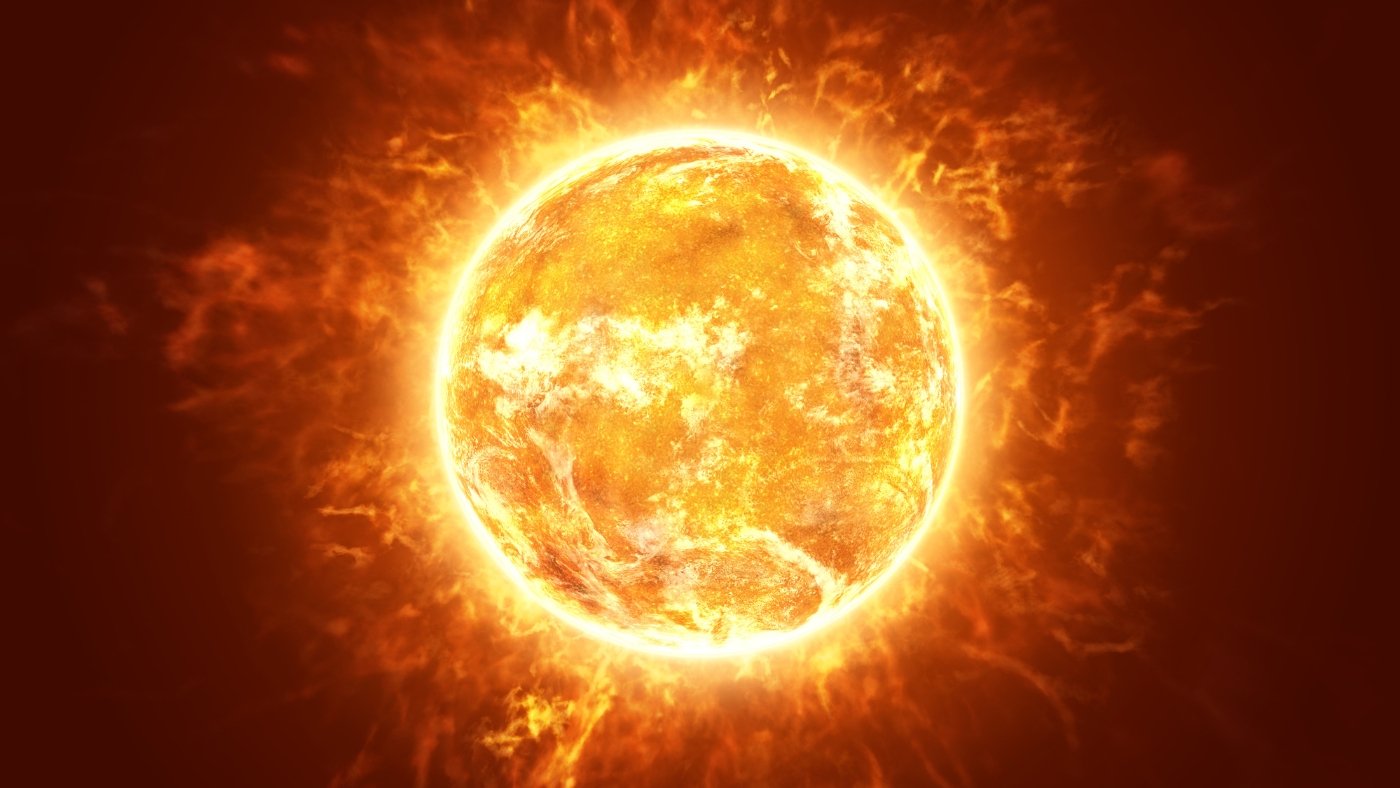
This week, there are forecasts of solar plasma jets from a “canyon of fire” on the Sun heading towards Earth. It all started with a magnetic filament eruption on Monday, followed by two more events releasing plasma towards our planet.
Plasma streams from the “fire drone” reached Earth this week.
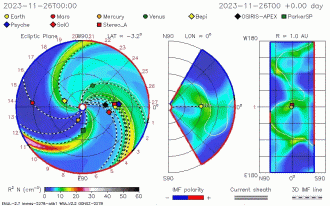
The simultaneous arrival of these events is expected to occur between Thursday and Friday and could lead to moderate geomagnetic storms. This prediction is based on NASA models.
Plasma is a distinct form of matter, separate from solid, liquid, and gas, that is created when gas atoms or molecules lose or gain electrons, leading to the formation of charged particles like positive ions and free electrons.
Sun plasma jets, known as solar winds, are continuous streams released by the sun into space, containing charged particles like protons and electrons, along with subparticles like neutrinos.
Coronal mass ejections, also called CMEs, can have different speeds. CMEs originating from the Sun’s poles through cracks can travel up to 800 km/s, whereas those in the same plane as the Earth move more steadily at approximately 400 km/s.

During solar cycles, which happen about every 11 years, the Sun’s magnetic field goes through a reversal, creating sunspots that develop into coronal holes on the Sun’s surface. This causes the release of sudden bursts of solar wind directed towards Earth.
NASA categorizes solar eruptions using a letter system (A, B, C, M, and X) to indicate the level of X-ray intensity. The most powerful explosions, known as class X, are infrequent, happening around 10 times annually and usually during peak solar activity.
Travel route

